.png)

Daily Scope / Jun 29, 2026
Congress Blocks CBDC: Implications for the Crypto Landscape
The recent congressional ban on CBDCs signals a shift in the digital currency landscape, favoring private stablecoin issuers while raising questions about regulatory futures.
Congressional Action: A Major Setback for CBDCs
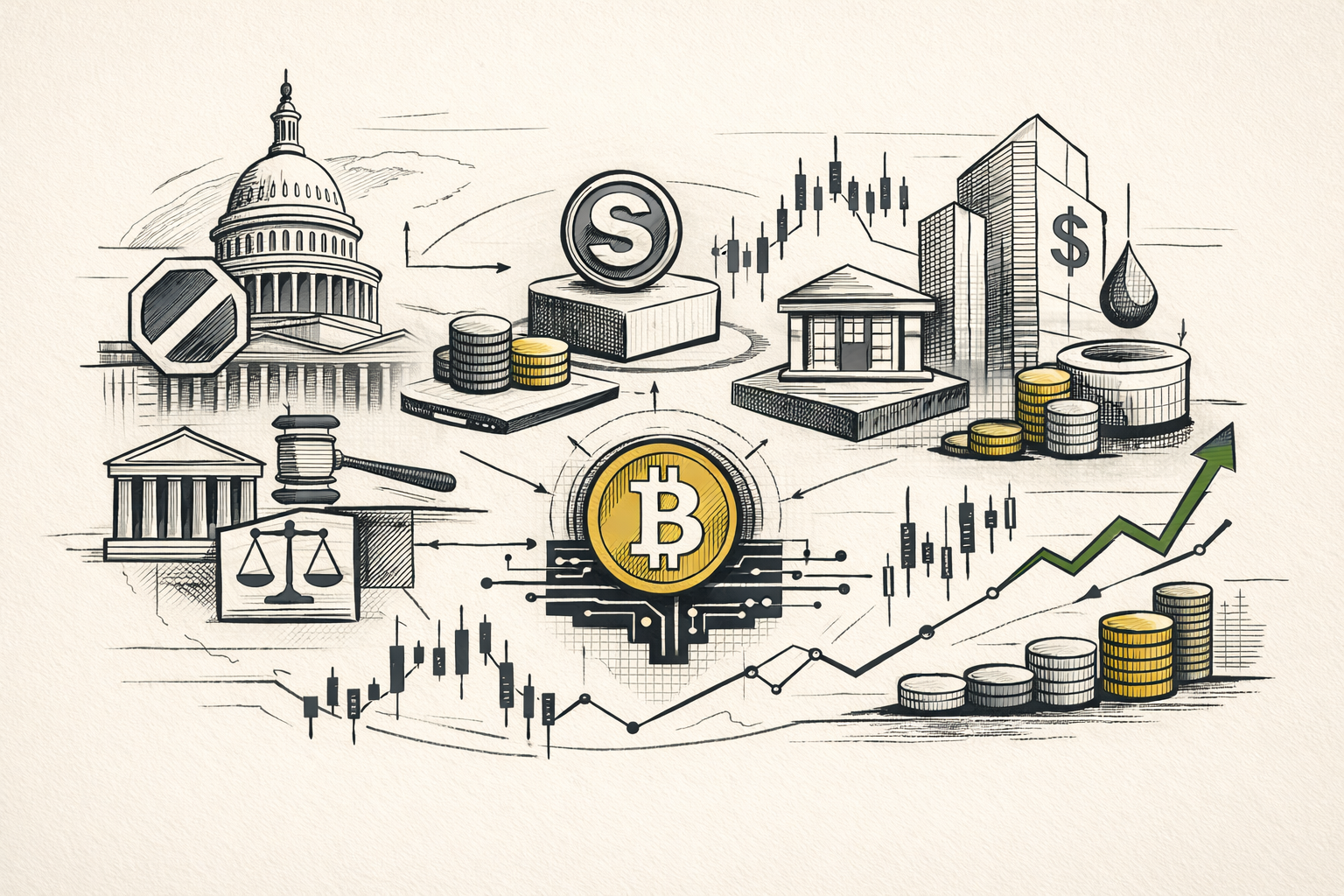
In a significant legislative move, Congress has enacted a four-year ban on the Federal Reserve's ability to issue a Central Bank Digital Currency (CBDC). This decision, encapsulated within the 21st Century ROAD to Housing Act, received overwhelming bipartisan support, passing the Senate with an 85-5 vote and the House with a 358-32 margin. The implications of this ban extend beyond mere policy; they signal a growing skepticism regarding government-issued digital currencies in the current political climate.
The congressional blockade indicates a cautious approach towards CBDCs, reflecting concerns about privacy, control, and the potential disruption of existing financial systems. As discussions surrounding CBDCs have intensified globally, the United States has taken a distinct stance, prioritizing traditional monetary frameworks over experimental digital alternatives. This decision underscores a complex interplay between innovation and regulation in the evolving landscape of digital finance.
Winners and Losers: The Rise of Stablecoins
With the CBDC ban firmly in place, private stablecoin issuers like Circle and Tether are poised to capitalize on this regulatory gap. The prohibition on government-backed digital currencies effectively creates an environment where these entities can thrive, potentially increasing their market share and influence. This shift raises questions about the future of stablecoins, which have already garnered significant traction as alternatives to volatile cryptocurrencies.
As regulatory scrutiny intensifies on major stablecoins, their role in the digital economy will likely come under closer examination. The absence of a CBDC may empower these private issuers to position themselves as the primary digital currency solutions for consumers and businesses alike. However, this also invites greater risk, as the stability of such coins can be influenced by market dynamics and regulatory developments, potentially leading to unpredictable outcomes in a fast-evolving market.
XRP and the ETF Landscape: Diverging Trends
In the backdrop of the CBDC debate, XRP has shown resilience, particularly within the context of exchange-traded funds (ETFs). Recent reports indicate that XRP ETFs are performing well despite significant outflows from Bitcoin (BTC) and Ethereum (ETH) ETFs. This divergence highlights a unique positioning for XRP in a challenging market, suggesting that investor sentiment may be shifting towards assets perceived as having more stable fundamentals.
As XRP navigates its own regulatory challenges, the contrasting performance of its ETFs could signal a potential shift in market confidence. While Bitcoin and Ethereum face increased scrutiny and capital flight, XRP's stability and ongoing developments may attract a different class of investors seeking refuge in less volatile assets. This trend could reshape the competitive landscape among cryptocurrencies, emphasizing the importance of regulatory clarity and investor sentiment in determining asset performance.
Market Sentiment: The Bearish Outlook for Bitcoin
Bitcoin is entering July 2026 with significant headwinds, trading near $59,500, a stark decline from its spring peak. Analysts are raising alarms about a make-or-break trendline that could signal deeper downside risks for the leading cryptocurrency. The combination of a bearish chart pattern and diminishing on-chain demand suggests that Bitcoin could be in for a rough month ahead, complicating the narratives surrounding mainstream adoption and institutional investment.
The broader cryptocurrency market appears to be grappling with a lack of momentum, as evidenced by Bitcoin's struggle to maintain its position. This scenario raises concerns about the sustainability of the recent uptrends and highlights the need for renewed interest and investment in the crypto space. As market participants assess their positions, the ability to adapt to changing conditions will be crucial for both established players and emerging projects alike.
The Future of Digital Currency: Regulatory Challenges Ahead
The congressional decision to block CBDCs may be just the beginning of a larger dialogue surrounding digital currencies and regulatory frameworks. As the landscape evolves, stakeholders must navigate complex issues of security, privacy, and consumer protection. The ongoing discussions about stablecoins, CBDCs, and cryptocurrencies will require a careful balancing act between fostering innovation and ensuring regulatory compliance.
In addition to the congressional ban, the potential for evolving regulations around stablecoins and digital currencies will play a pivotal role in shaping the future of the crypto market. As governments and regulatory bodies grapple with the implications of digital assets, the path forward may be fraught with challenges that require agile responses from industry participants. The next few years will be critical in determining how digital currencies integrate into the broader financial ecosystem and the regulatory frameworks that will govern them.
Want More Unfiltered Insights?
View Latest Insights on X